
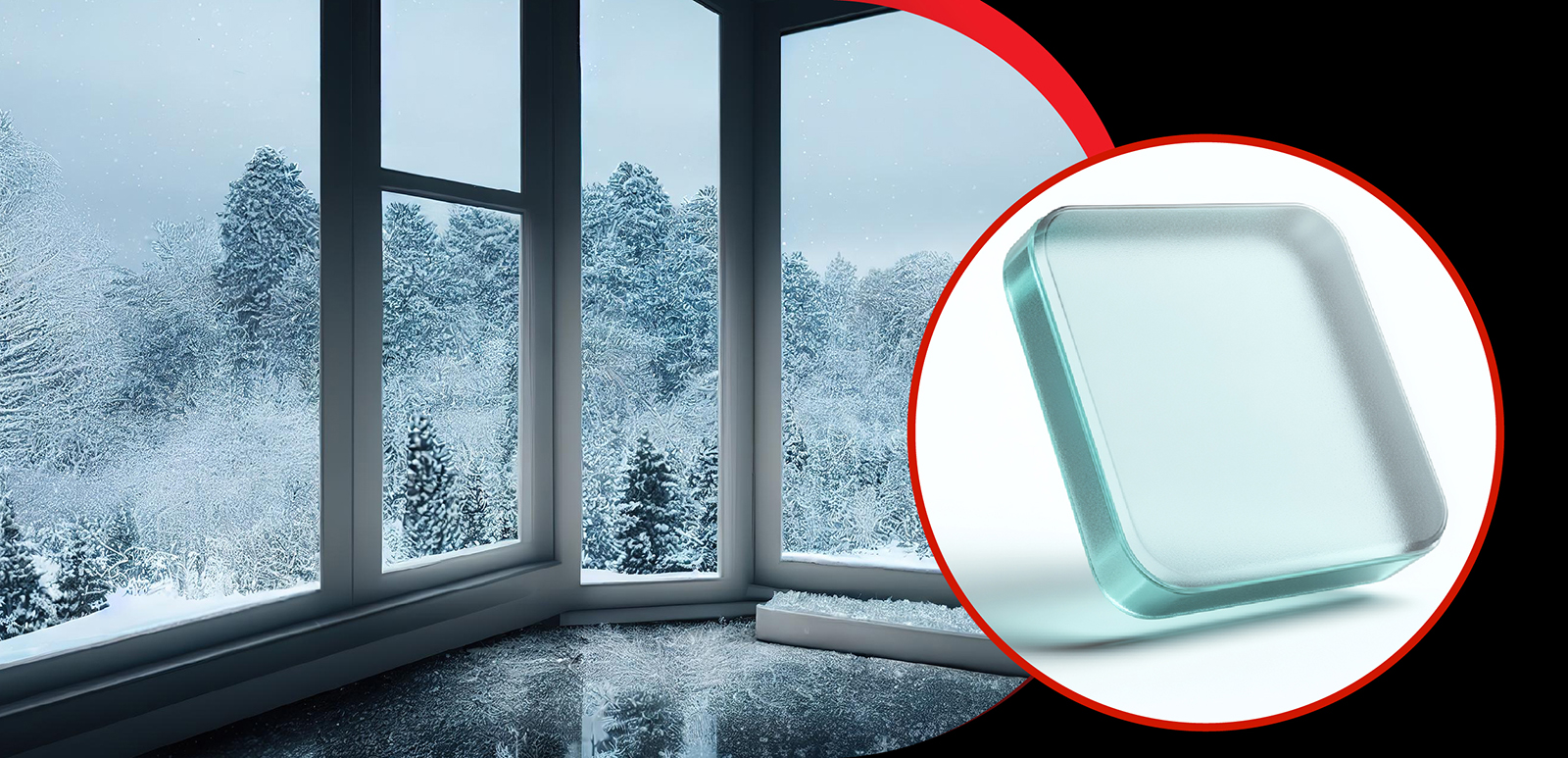

Winter-proof your home:
How Him Imperial’s glass solutions keep the cold out
Just look at the amount of glass around us – kitchenware, appliances, buildings and a zillion other things we use daily. In fact, in recent years glass has emerged as one of the most essential materials in construction in addition to being extensively used in automotive, pharmaceuticals, chemical, manufacturing and various other industries. Notice keenly and you will discover that almost every other building whether it is an apartment complex, shopping mall, or an office space, extensively uses glass in its facades, balconies, balustrades and other sections. These use a special kind of glass, toughened or laminated, depending on the application.
Among the most widely used types of glass varieties available are toughened glass and laminated glass. Both are differently treated to offer distinct safety and functionality for both domestic and commercial applications. Here are the key characteristics.
Toughened glass
Toughened glass is also known as tempered glass and is created by heating regular glass to a high temperature of 650°C and then cooling it quickly. The process makes it tough and up to 400% -500% more resistant to heat and impact when compared with ordinary glass.
The process of toughening enhances the structural durability and thermal strength of the end product and increases its resilience and capacity to withstand heat. One important aspect to note is that the glass cannot be recut once it is toughened and it has to be cut prior to the process of toughening. Once the glass is specially treated, it breaks into small, blunt pieces under impact which makes them safer than the shards of normal glass.
Both toughened glass and laminated glass types are manufactured from float glass (also known as annealed glass). Float glass is manufactured by allowing molten glass to cool slowly in a monitored environment and once produced, the clear float glass is cut to size as required and then subjected to further processes like tempering.
Laminated glass
Laminated glass has a more complex process. Technically this is similar to the strength of regular glass but the difference is in the design. In the case of laminated glass, two panes of 3mm thick regular glass ensconce a plastic interlayer which holds them together. A tough resin, the PVB plastic interlayer holds the glass planes firmly in place and should the glass shatter, the splinters hold on to the plastic layer and do not scatter like it happens in the case of regular glass.
Internationally, it is prescribed that laminated glass has to be developed to EN ISO 12543 specifications and the transparency of the glass must not be altered during the process of lamination. The resin layers between the glass panes are of different materials. These are:
Laminated glass uses different resins including PVB, EVA & SGP, each of which provide a different characteristic. PVB laminated glass is when two glass sheets are sandwiched with PVB (PolyVinyl Butyral) film, a thermoplastic resin film produced by PVB resin with additive plasticizers. PVB offers excellent safety, sound insulation, transparency, and UV resistance while is low in terms of water resistance. The product tends to delaminate in a humid environment over a period of time.
EVA offers better fluidity which means it can be processed into decorative glass with a range of patterns and designs. It also has a lower melting temperature of around 110°C and commendable water resistance though it displays poor UV resistance. The glass tends to turn darker after prolonged exposure to sunlight.
SGP has twice the load-bearing capacity of PVB at the same thickness and five times the tear strength while it has one-fourth the bending deflection. The SGP interlayer is colourless and transparent and displays good UV resistance.
Benefits: safety, soundproofing, and UV protection
Laminated glass is widely used in display cabinets to showcase valuables such as expensive jewellery and watch showrooms, exotic pet enclosures, aquariums, glass floors etc. Their security properties are useful in locations such as banks, currency exchange centers, museums and art galleries. The most commonly used is of course in windshields of vehicles.
Toughened glass is widely used in building facades, balconies, skylights, balustrades, roof glazing, partitions, etc. The glass is also extensively used in hotels, airport terminals, recording studios and furniture in table tops, light shades etc.
With an increasing focus on harnessing natural light in buildings, laminated glass is just what architects love as it can absorb up to 99% of the damaging UV rays which means excellent protection for interior surfaces and furniture. The other advantage of laminated glass is acoustic insulation which helps in reducing noise levels ensuring people can have peace and privacy in their work spaces.
While both toughened and laminated glass provides reasonable protection against cold weather, extreme cold weather warrants that you use triple-pane glass windows which can significantly reduce transmission of cold into the inside.
Laminated glass is more expensive, costing between Rs. 200 to Rs. 350 / sq.ft. Toughened glass costs between Rs. 125 to Rs. 250 per sq.ft. These glass types are available in different thicknesses ranging from 6 mm to 12 mm, with 10 and 12 mm being the most popular for construction applications.
Him Imperial - a leading name in glass
Him Imperial Auto Glass Works is one of India’s leading manufacturers of glass and a complete glass solutions company. Him Imperial produces several varieties of glass for various applications. Established in 2008 in Kala Amb, Himachal Pradesh, Him Imperial manufactures to exacting internal standards using the finest raw materials and processes. The company is ISO 9001:2015 certified and our products’ quality standards are approved/verified by ARAI (THE AUTOMOTIVE RESEARCH ASSOCIATION OF INDIA), ICAT (INTERNATIONAL CENTRE OF AUTOMOTIVE TECHNOLOGY), BIS (BUREAU OF INDIA STANDARDS) & IATF (TS). We are a European Union (E+ Marking) certified company.
Our manufacturing facilities incorporate modern machinery and a full-fledged testing lab with sophisticated equipment. We have developed a high level of competence in product development that includes in-house tool design. Today we are a widely recognised automotive and building and construction glass solutions company and produce one of the largest spans of laminated glass (2000 * 3000 mm wide) for front windshields of heavy vehicles.
Since inception, we have focused on forging long term relationships with our customers and are driven by the core values of integrity and commitment to quality. We are proud to have some of the best known names in the industry for customers – leading coach builders, state road transport corporations, heavy engineering equipment manufacturers, reputed builders and developers, prestigious manufacturers of buses, cars and trucks among others, who vouch for Him Imperial laminated safety glass.
To learn more about our offerings in toughened glass, laminated glass and our other products, visit us at www.himimperial.in.